Fashion month just wrapped. Nobody asked AI about the runway.
Runway coverage floods your feed every September, but almost nobody types the show name into ChatGPT. They describe the life they're trying to dress for. Here's the gap that opens up between the two.
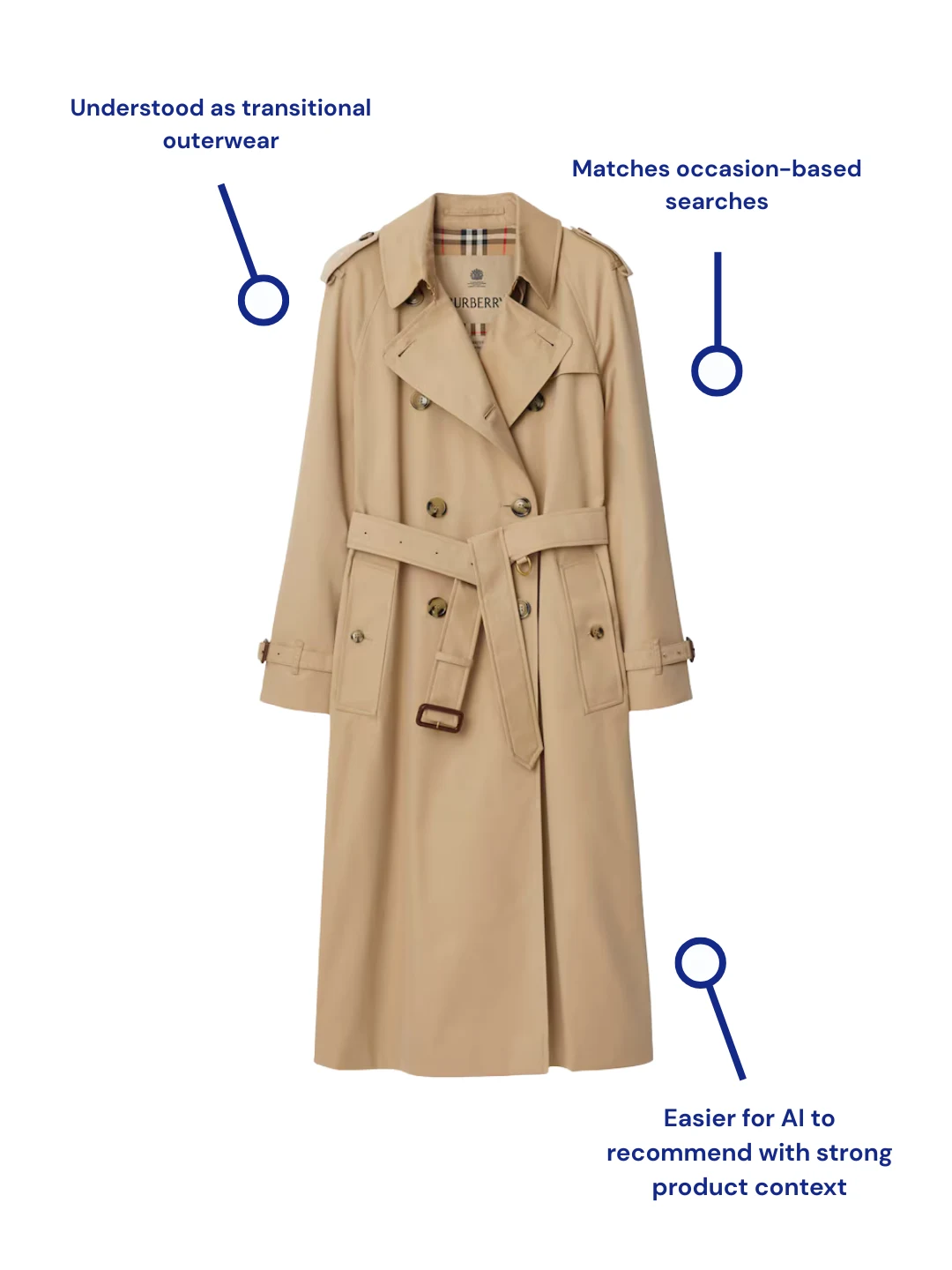
Fashion month just wrapped, and for two straight weeks your feed was full of it: front row photos, runway recaps, “the five trends you’ll see everywhere this fall.” It’s the loudest the industry gets all year. Which makes it a little strange that almost none of that noise shows up in what shoppers actually type into an AI assistant.
Nobody opens ChatGPT and asks about a specific show. What they ask is closer to “I’m attending fashion events this autumn, I want a timeless wardrobe that feels effortless.” No designer name. No trend word. Just the version of herself she’s trying to dress, and a question about whether your catalog can help her get there.
The trend cycle and the AI query cycle are running on different clocks
Editorial trend coverage moves in a burst. A show happens, the writeups land within 48 hours, and for about three weeks “wide-leg trousers” or “ballet flats” gets repeated across every fashion outlet until it’s background noise. That’s useful if you’re a buyer or a stylist. It’s mostly irrelevant to how an AI assistant fields a shopping question, because the assistant isn’t being asked to name the trend. It’s being asked to solve a situation, and situations don’t come with a trend label attached.
That’s the mismatch worth sitting with. A brand can nail the seasonal trend in its merchandising, feature exactly the right silhouette, and still be invisible in AI answers, because the product data never says anything about the actual life the customer described. “Timeless” and “effortless” aren’t keywords you’d find on a runway recap. They’re the words a real person uses when she’s trying to explain what she wants without sounding like she’s asking for a trend at all.
What the query is actually doing
Read that ChatGPT message again: fashion events, autumn, timeless, effortless. That’s four separate signals packed into one sentence, occasion, season, longevity, and level of polish, and an assistant has to reason through all four before it can recommend anything with confidence. If your product page says “wool blazer, size range XS-XL,” none of those four signals are answered. The model has nothing to work with except a category and a size chart.
Compare that to a page that actually says the blazer holds its shape through a full evening out, works past this season without reading as dated, and doesn’t need much beyond a good pair of trousers to look finished. That’s not marketing copy. That’s the exact information the assistant needs to match “timeless, effortless, fashion event” to a real product instead of guessing.
Fashion month gives you a short, valuable window
Here’s the part that’s easy to miss: fashion month itself doesn’t move your AI visibility, but it moves customer intent for the six or so weeks after it. That’s when wedding guest season and event dressing questions start overlapping with a new round of “I need pieces I can wear now that still feel current in November.” It’s the same underlying pattern we see every time a season turns: a burst of very specific occasion questions, and a short window where whoever has the clearest product data gets picked.
The brands that show up aren’t the ones who had the trendiest pieces on the rack. They’re the ones whose product data already answered the occasion question before the shopper finished typing it. A structured blazer described only by fabric and cut loses to the exact same blazer described as something that works from a gallery opening to a client dinner without a wardrobe change in between.
What to actually check this week
You don’t need a trend report to close this gap. You need to look at whether your catalog answers the questions people are asking right now, not the ones a runway recap assumes they’re asking:
- Occasion range: does the product page say what kind of “fashion event” this piece is actually built for, a gallery opening reads differently than a black-tie dinner.
- Longevity signals: “timeless” gets earned in the data, not just the styling. Say plainly if a piece is built to outlast one season.
- Effort level: “effortless” is doing real work in that query. Does the piece need styling help to look finished, or does it stand on its own.
- Distance from trend language: if your only copy leans on this season’s trend words, it’ll read as dated the moment the cycle turns, which is exactly the opposite of what “timeless” needs.
None of this requires a new photoshoot or a rewrite of your brand voice, the same way product versatility rarely requires new photography to show up in more searches. It’s a layer of context sitting underneath the product you already have, written down in a way a model can actually reason with.
See what your catalog says back
Ask an AI assistant the exact question this post opened with, or one close to how your own customer actually talks. See whether your brand comes up, and whether it sounds like it understands the moment she’s dressing for. An AI visibility audit shows you exactly where that gap sits, product by product.
Book a demo and let’s see what fashion month actually did for your AI visibility, not just your feed.