It's 95 degrees outside. She's already asking AI what to wear in October.
Shoppers are researching transitional fall pieces weeks before the weather turns. Here's why that product data gap decides who gets recommended, and who gets skipped.
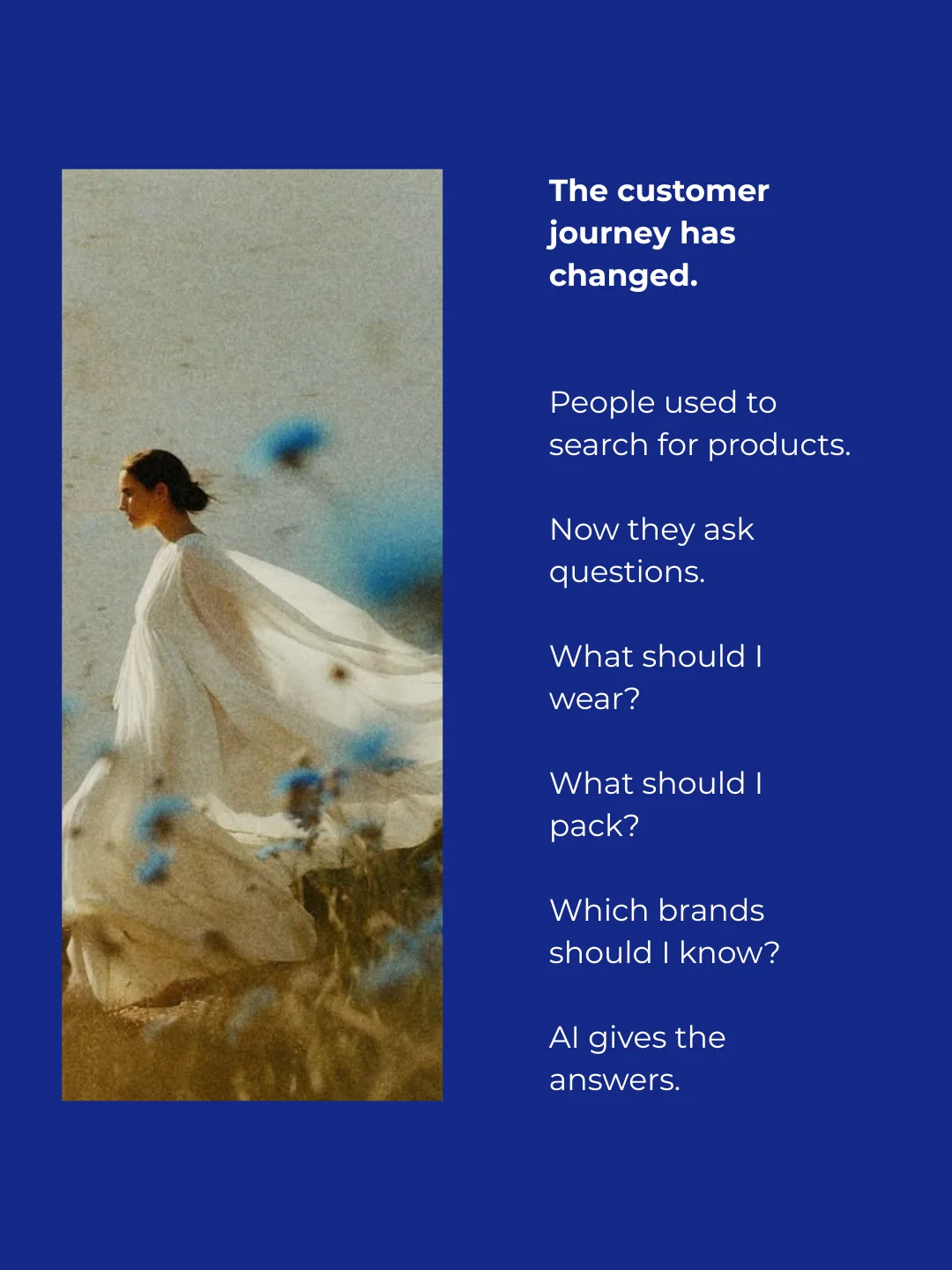
It’s the last week of July, ninety-plus degrees in most of the country, and somewhere a shopper standing in a fitting room is asking an AI assistant a question that has nothing to do with summer: what’s actually going to look good layered under a blazer in October. She isn’t planning ahead out of boredom. She’s planning ahead because transitional dressing is exactly the kind of purchase that goes wrong when you leave it too late, and she already knows the smart move is to solve it before the rest of the internet is running the same search in September.
Most brands are still fully in summer sale mode right now, which makes sense. But interest in transitional pieces, the jackets and knits that bridge a ninety degree afternoon and a sixty degree evening in the same week, starts climbing weeks before the calendar says it should. AI assistants are already fielding these questions. The brands whose catalogs can answer them are the ones who get remembered in October, not just discovered in July.
A “what to wear in between” question is harder than it looks
Nobody asks an assistant to “recommend a fall jacket.” They ask something closer to: something I can throw over a summer dress in September that won’t look like I’m trying too hard, works from a 70 degree morning through an 80 degree afternoon, under $150. That’s three constraints stacked on top of each other, and an assistant can only answer it if the product data underneath already knows the difference between a piece built for layering and one that only works once it’s genuinely cold out.
Most catalogs don’t make that distinction. A lightweight cotton blazer and a wool blend car coat can sit next to each other with nearly identical descriptions, even though only one belongs in a transitional weather answer. An assistant with no way to tell them apart either guesses badly or leaves your product out of the answer entirely.
Why the early window matters more than the actual season
Transitional pieces have an odd shopping pattern. Interest spikes early, while it’s still hot out, because shoppers with any sense of timing know that if they wait until it’s actually cold, the good pieces are sold out and they’re stuck reordering. That means the brands winning this moment aren’t reacting to the weather. They’re reacting to a search pattern that starts six to eight weeks ahead of the actual temperature drop.
It also means a brand that’s slow to show up here isn’t just missing today’s sale. It’s missing the shopper’s whole fall wardrobe decision, made quietly in July, that determines what she comes back for in September and October too.
What has to be true in the product data
Getting recommended in a transitional dressing answer takes more than better copy — it’s generative engine optimization applied to a short seasonal window. It takes attributes an AI assistant can actually reason with:
- Layering role: standalone piece, over layer, under layer, or works as either
- Temperature range: the actual span it’s comfortable in, not just a season label
- Versatility signals: reads as office appropriate, weekend, or both
- Fabric behavior: breathable enough for a warm afternoon, warm enough for a cool morning
Veristyle’s Product Customer Intelligence Layer reads a full catalog with computer vision and tags this level of nuance automatically, then puts it to work in two places: on site recommendations that can actually answer “what works right now, in this weather, for this person,” and the structured data that lets ChatGPT, Perplexity, and Google’s AI Overviews put your product into the answer instead of skipping it for a competitor whose catalog was easier to parse.
None of it requires a redesign or a new photoshoot. It works with the catalog you already have.
The shoppers asking now are the ones you lose quietly
Nobody complains when an AI assistant leaves their product out of an answer. They just don’t see it, and they buy from whoever did show up. That’s the quiet part of this problem: by the time a brand notices its fall numbers underperforming, the shopper who would have bought from them already made the decision weeks earlier, in a chat window, based on data that wasn’t there.
If you want a clear read on what AI assistants can currently say about your transitional pieces, an AI visibility audit takes about five minutes and shows you exactly where the gaps sit.
Book a demo and let’s make sure the next “what should I wear in October” question ends with your brand in the answer.