No, AI search optimization will not touch your product pages
The question we get on almost every call: will this change what my site looks like? Here's what actually happens under the hood when you optimize for AI search, and why the answer is no.
There is a question that comes up on almost every call we run with a fashion or beauty brand, usually somewhere around minute ten, once the initial pitch has landed and the founder or ecommerce lead starts thinking about what this actually means for their store.
“So what happens to my product pages?”
It’s usually asked carefully, the way you’d ask about anything that touches your brand’s face to the world. And it makes sense that people ask it. Most of them have worked with an SEO agency before, or a growth consultant, and the experience often involved someone rewriting product copy into something that technically ranked better and read like nobody at the company had actually written it.
So we’ll say the answer plainly, because it’s worth saying plainly: your product pages don’t change. Nothing a shopper sees on your site changes. The words on the page, the layout, the photography, the tone your team spent months getting right, all of it stays exactly as it is.
What actually happens instead
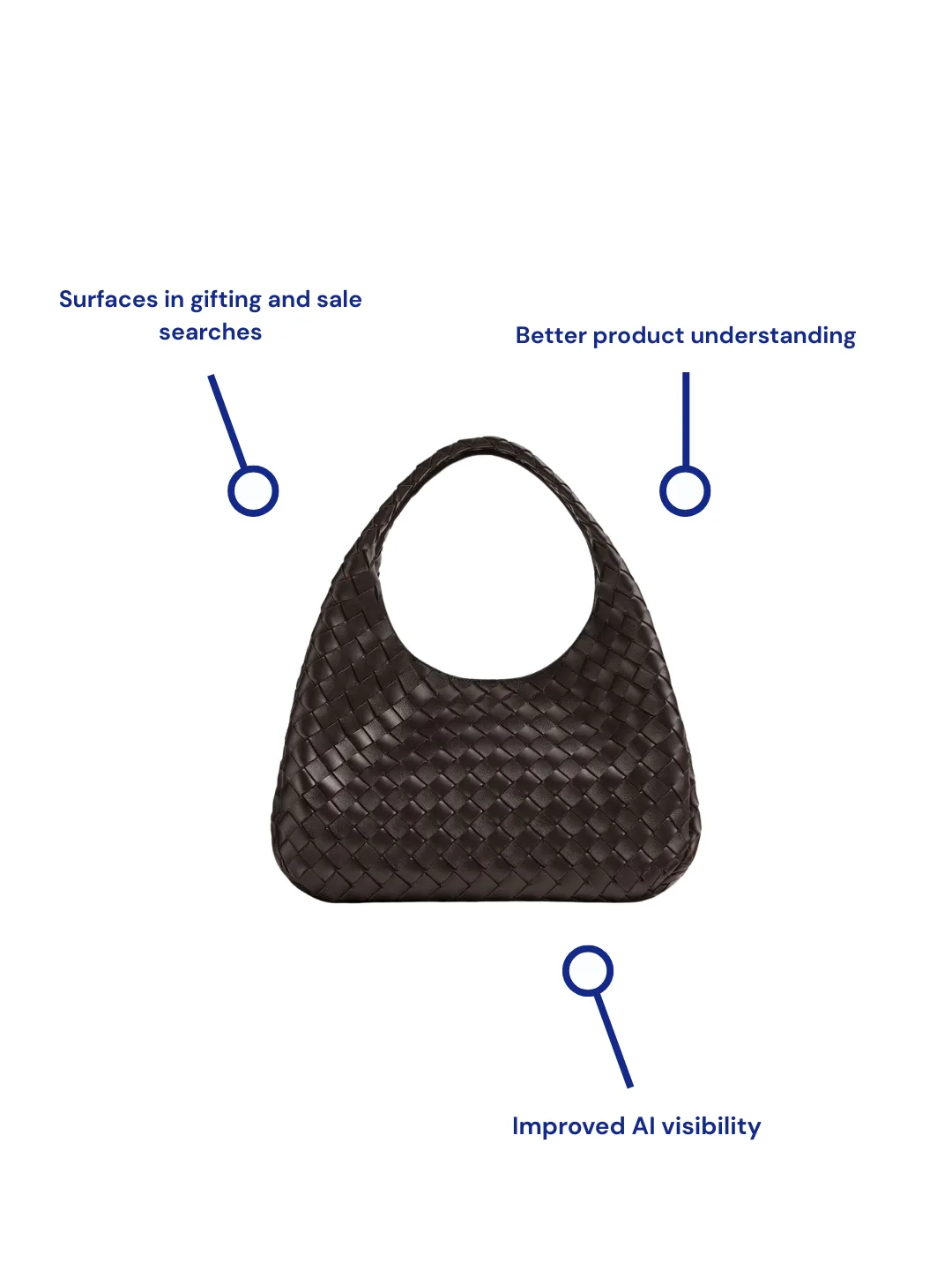
What Veristyle does is build a layer underneath your storefront, not on top of it. Computer vision reads every product image and description and extracts the attributes that matter, fit, fabric, color undertone, silhouette, occasion, the kind of detail a good stylist would notice instinctively. That gets structured into a format AI engines can actually parse: ChatGPT, Perplexity, Google’s AI Overviews, whichever assistant a shopper happens to be using that day.
None of that structured data lives on the page a customer looks at. It lives in a feed, in schema markup, in the machine-readable layer that sits behind your storefront and gets served to the crawlers and models that are increasingly doing the deciding on a shopper’s behalf. Your PDP copy is the same copy your merchandising team approved. The data that helps a model understand “structured shoulder, warm ivory, flatters a pear silhouette” is a separate, additional thing, not a replacement for what’s already there.
Why we’re being explicit about this now
We actually tightened our own language on this recently. A few of our earlier pages implied, without meaning to, that Veristyle “enhances” or “rewrites” product pages as part of AI optimization. That was sloppy phrasing on our end, and a couple of prospective customers rightly pushed back on it during calls. So we went back through the site and cleaned it up, because the distinction matters more than it might sound like it does.
It matters because the two things people worry about when they hear “AI optimization” are, one, that it’ll make their brand sound generic, and two, that it’s one more vendor asking for CMS access and design sign-off. Neither is true here. There’s no redesign. There’s no rewrite. There’s a data layer that makes your existing catalog legible to systems that weren’t built to read a photograph or infer what “elevated basics” means.
What this looks like for a real catalog
We’ve run this process across catalogs ranging from a few hundred SKUs to several thousand, and the pattern holds regardless of size: the storefront a shopper lands on Tuesday looks identical to the one they’d have seen the week before the audit ran. What’s different is what happens when someone asks ChatGPT for a linen blazer that works for a warm-toned pear shape, or asks Perplexity which jewelry brands make understated gold pieces for a meaningful gift. The model now has something specific to work with, pulled from data your brand always had but that used to live only in a founder’s head or a merchandising spreadsheet.
One jewelry brand we worked with put it simply after their audit: nothing on their site changed, but their pieces started turning up in the exact searches their ideal customer was actually running. That’s the goal. Visibility without a redesign.
The honest version of this pitch
We’d rather tell you plainly what this product does than let you assume the scarier version. AI search optimization, done properly, is closer to giving your catalog a translator than giving it a makeover. Your brand voice, your photography, your layout, none of it is ours to touch, and none of it needs to be.
If you’re curious what your catalog currently looks like to ChatGPT or Google AI, an AI visibility audit will show you, in about five minutes, without asking for anything more than your store URL. Or if you’d rather talk it through first, book a demo and we’ll walk you through exactly what changes and, just as importantly, what doesn’t.