Your summer sale is live. AI assistants don't know it exists.
Fashion brands are running their biggest promotions of the year — and losing a growing segment of buyers to brands whose catalogs AI can actually read.
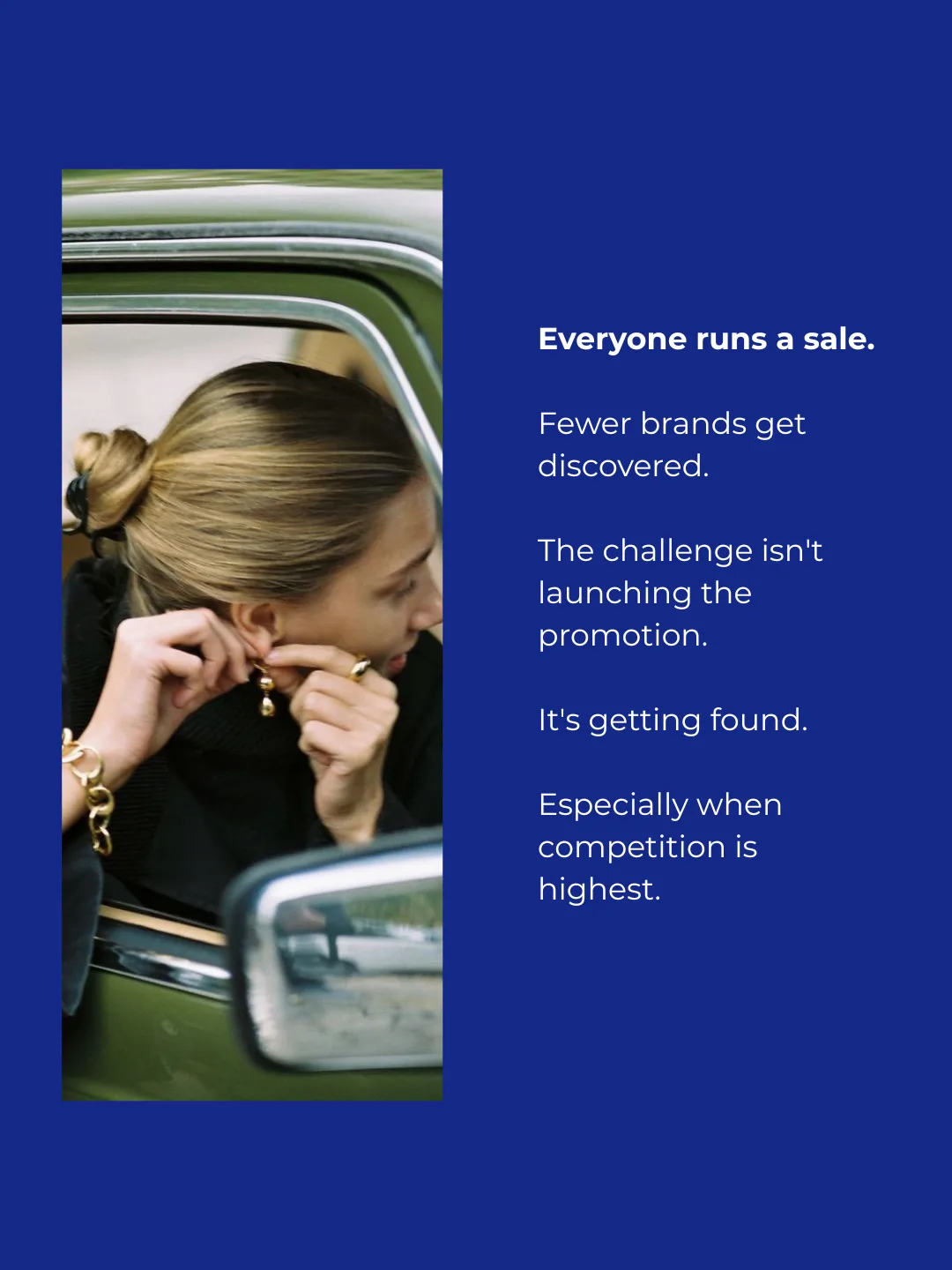
Summer is the busiest sales season in fashion. Brands are slashing prices, launching limited drops, promoting travel capsules. The ad spend goes up, the email cadence gets aggressive, the Instagram grid gets a refresh.
And somewhere on their phone, a shopper is asking ChatGPT what to pack for Amalfi Coast.
That shopper isn’t browsing your sale page. They’re not clicking your paid search ad. They typed a question into an AI assistant, got a list of recommendations, and either your brand was on it or it wasn’t.
The way people find clothes has quietly changed
Search used to mean keywords. A shopper typed “white linen dress summer” and you competed on SEO, bid on Google Shopping, and hoped your product image stopped the scroll.
That still happens. But a growing segment of shoppers — particularly the high-intent, high-AOV ones — now start differently. They ask questions.
“What should I wear to a rooftop wedding in July?” “Best swimsuits for a short torso under $120?” “What do people actually wear in Santorini in August?” These aren’t search queries. They’re conversations. And the answers come from AI assistants: ChatGPT, Perplexity, Google’s AI Overviews, even Claude.
The brands getting recommended there didn’t get lucky. They made their catalogs legible to those models.
Sale pages are often the worst pages for AI discovery
Here’s the painful irony of summer sales: the promotional infrastructure brands build — dedicated sale landing pages, badge overlays, filtered collection pages — tends to be terrible for AI indexing.
A sale page that says “Up to 40% off — Shop Now” tells an AI assistant almost nothing about what’s in the collection, who it’s for, or what problem it solves. The products underneath often have descriptions written for a shopper who’s already there, not for a model trying to match them to someone asking “what’s a good going-out dress for a curvy figure?”
Meanwhile, the shopper asking that question is getting recommendations from brands whose product data actually answers it.
What AI needs to recommend your summer pieces
It’s not about having the lowest price or the flashiest promotion. AI assistants recommend products they can match confidently to the query.
For a summer dress, that means: what occasion does it work for, what body types does it suit, how does it fit relative to standard sizing, what’s the fabric like in heat, does it photograph well or look flat. “Flowy midi dress, $89, available in 4 colors” answers none of those questions.
The brands showing up in AI answers have product data that reads like a thoughtful recommendation: “relaxed linen midi, works well for pear and hourglass silhouettes, generous room through the hips, lightweight enough for 30-degree days, slight transparency — wear with a slip.” That description can be matched to dozens of real shopper queries. The standard one can’t.
The timing matters more than brands realise
This isn’t an abstract future-state concern. Travel booking peaks in June. Summer shopping intent peaks now. The shoppers asking AI for Amalfi packing lists and Greece vacation outfits are actively spending money this month.
If your catalog isn’t enriched yet, you’re not invisible next year — you’re invisible right now, during the highest-intent window of the season.
The brands investing in catalog enrichment aren’t doing it as a long-term R&D project. They’re doing it because it’s paying off in the current quarter: more AI referrals, higher AOV (typically around 2x), fewer returns because shoppers are buying things that actually fit.
You don’t have to choose between running a sale and being discoverable
The common assumption is that AI visibility is a separate workstream — something you tackle after the sale season, once you’ve caught your breath. But the enrichment work that makes you discoverable in AI search is the same work that improves on-site search, reduces returns, and increases conversion. It’s one infrastructure investment with multiple payoffs.
Your summer sale is already live. The question is whether the people asking AI to help them shop for it can find you.
An AI visibility audit takes five minutes and shows you exactly where your catalog stands right now — during the season that matters most.