She asked ChatGPT for a candle that smells like her mom's kitchen. Beauty brands aren't ready for that question.
Fashion isn't the only catalog AI struggles to read. Beauty and fragrance brands have the same problem, and gifting season is about to make it obvious.
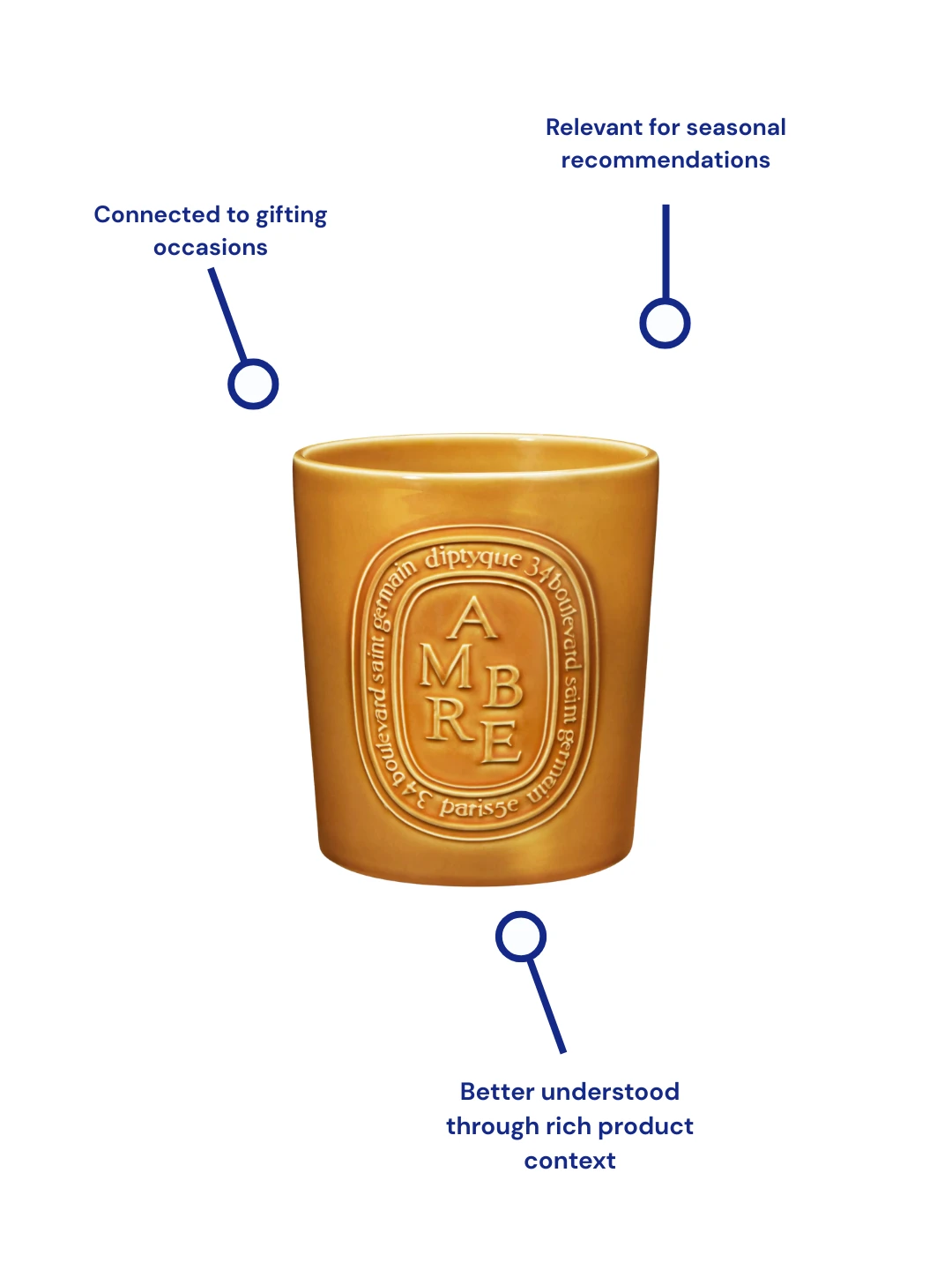
“My mom loves warm, cozy scents, something that reminds her of baking. Budget around $60.” Type that into ChatGPT and it won’t hand you a candle aisle to scroll. It’ll name two or three specific candles and explain why each one fits.
That’s the moment most beauty and fragrance brands haven’t planned for. Everyone’s chasing search rankings and social reach. Almost nobody’s asked what has to be true about a product listing before an AI assistant can make a case for it over a competitor’s.
The same problem we keep seeing in fashion, just less talked about
We’ve written before about how AI shopping assistants reason from product data, not product photos. A model can’t smell a candle or feel a face cream. It only knows what’s written down: category, size, price, maybe an ingredient list. That’s enough to answer “what is this.” It’s nowhere near enough to answer “does this fit what she asked for.”
Beauty and fragrance make that gap even sharper than apparel does, because the language shoppers actually use is almost entirely mood and memory. Nobody searches for “amber scented soy candle, 190g.” They ask for something that “smells like nostalgia,” or a “gift for someone who only wears warm woody perfumes,” or “a moisturizer that won’t break out sensitive, combination skin.” None of that maps cleanly to a spec sheet, and specs are usually all a beauty catalog has.
What’s actually missing
Most beauty product pages are built to answer one question: what is it. Scent family, size, price, maybe a skin type flagged in a filter. That’s fine for a shopper who already knows the exact product she wants. It’s useless for an assistant trying to match a mood, a memory, or a recipient it’s never seen described before.
The context that would actually help is rarely written anywhere a model can read:
- Mood and scent story: is it warm, fresh, cozy, bright. “Smells like a bakery in winter” gets a candle recommended far more often than “amber, vanilla, tonka bean” on its own
- Gifting fit: who is this for, and for what occasion. A model asked for “a gift for my sister who’s impossible to shop for” needs a reason to pick one candle over another, not just a price point
- Skin and sensitivity signals: fragrance-free, non-comedogenic, suited to combination or reactive skin. These are exactly the filters shoppers ask AI assistants about instead of reading twelve ingredient labels themselves
- Seasonal and occasion relevance: the same candle that’s a summer citrus pick in June becomes a cozy autumn gift by October, if the data says so
None of that requires reformulating a single product. It’s a layer of context underneath the product that already exists, written in a way a language model can actually use to reason, not just index.
Rich product context isn’t a nice-to-have here
We see this pattern across every catalog we work with, and beauty and fragrance brands feel it more than most because the buying decision is so rarely rational in the way a spec sheet assumes. A customer isn’t choosing between “amber” and “vanilla” the way she’d choose between two laptop processors. She’s choosing a feeling, a memory, or a person she’s shopping for. If none of that is written down anywhere an AI system can read it, the model has nothing to reason with, and it moves on to a competitor whose data happens to say more.
That’s the part that stings. The products best positioned to win these searches, thoughtfully made, genuinely gift-worthy, often have the thinnest data behind them, because nobody thought a bestseller needed more explaining. Meanwhile a plainer product with three sentences of the right context shows up in recommendation after recommendation. The model isn’t rewarding the better candle. It’s rewarding whoever actually described what it’s for.
Check what your catalog is actually saying
Gifting season is coming, and a growing share of that shopping starts with a question typed into an AI assistant, not a search bar. Ask ChatGPT or Perplexity to recommend a fragrance or skincare gift in your category and see whether your products show up at all, and if they do, whether the reasoning sounds right.
An AI visibility audit shows you exactly which of your beauty or fragrance products are only answering “what is this” right now, and what’s missing to let them answer “why should I buy this for her” too. Book a demo and we’ll walk through your catalog together.