Nobody reads gift guides anymore. They ask for one.
Shoppers used to click through a listicle to find a present. Increasingly they just ask an AI assistant, and most product catalogs have no idea how to answer a gifting question.
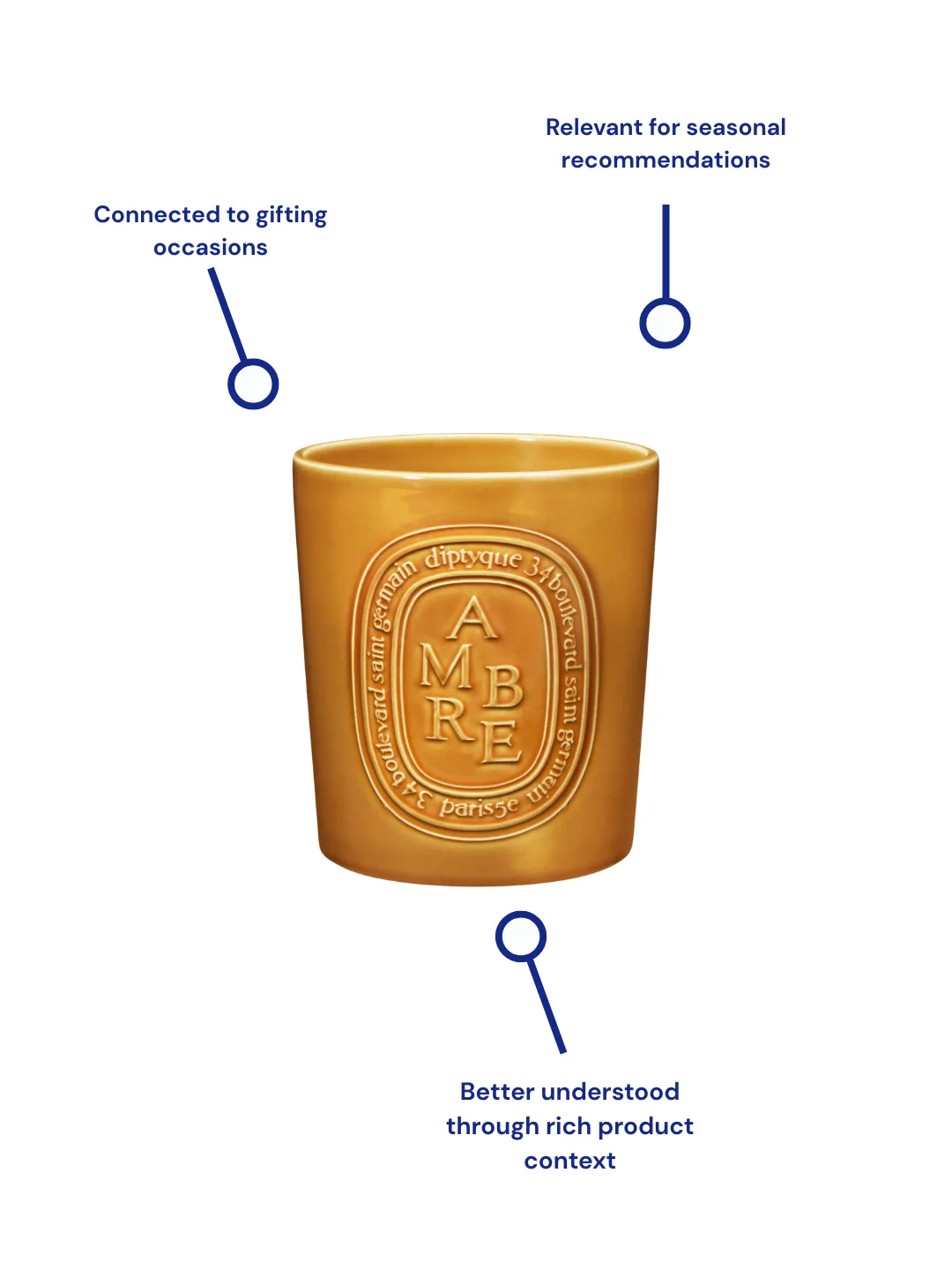
Somewhere right now, someone is typing a version of this into ChatGPT: “my sister loves candles but hates anything that smells like a flower shop, what should I get her.” Ten years ago that question turned into a Google search, a scroll through a “Best Gifts For Her” listicle, and a click on whichever product photo looked nicest. Today the assistant just answers. It picks two or three brands, describes why they fit, and the shopper is halfway to checkout before she ever lands on a gift guide page.
That’s the part most brands haven’t caught up to. The gift guide didn’t disappear, it moved. It’s no longer a page you publish in November and hope ranks well. It’s a conversation happening inside an AI assistant, built in real time from whatever the assistant can actually understand about your products, and most catalogs simply weren’t written with that conversation in mind.
A gift guide page and a gifting conversation aren’t the same thing
A blog post titled “Best Gifts Under $50” is a static list a person assembled once. An AI assistant answering “what should I get my sister” is doing something closer to matchmaking in real time, weighing recipient, occasion, price, and tone all at once, then picking whichever products it can confidently reason about.
The gap is that most product data was written to describe the item, not to describe who it’s for and why. “Soy candle, 8oz, cedar and amber” tells a shopper what’s in the jar. It tells an AI assistant almost nothing about whether this is a housewarming gift, a thank-you gift, or a self-purchase, which means the assistant either guesses or skips it for a competitor whose data made the decision easy.
What “gift-ready” product data actually includes
Getting recommended in a gifting query takes more than good photography and a clean description. It takes attributes that map to how a person actually thinks about buying for someone else:
- Recipient framing: who a piece tends to suit, whether that’s “for someone who prefers subtle over bold” or “for someone hard to shop for”
- Occasion and relationship: housewarming, anniversary, coworker exchange, self-purchase during a sale, each of which calls for a different tone and price point
- Price tier clarity: not just the number, but where it sits relative to “thoughtful but not overboard” or “the one big gift of the year”
- Sentiment and symbolism: whether a piece reads as playful, sentimental, elegant, or practical, since that’s often the actual deciding factor
None of this is a rewrite of the product page. It’s a layer of context sitting underneath it, the same kind of underlying enrichment that already helps AI assistants match products to body types, occasions, and styling questions elsewhere in a catalog.
Why this rewards specific brands over generic ones
The instinct with gifting content is to go broad: “great for everyone,” “perfect for any occasion.” That instinct works against you here. An assistant fielding a specific request needs a specific answer, and vague positioning gives it nothing to commit to. A brand that’s tagged its candle as “unscented-adjacent, minimal, reads more architectural than cozy” is easier for a model to recommend confidently than one that’s simply “a nice candle,” because the model can match it to an actual person instead of hedging.
This is also where smaller, well-tagged catalogs punch above their weight. A merchant with two hundred SKUs described precisely will out-recommend a merchant with two thousand SKUs described generically, because the model isn’t ranking by inventory size, it’s ranking by how confidently it can answer the question in front of it.
The window is shorter than it looks
Gifting queries don’t wait for a seasonal campaign to launch. They start weeks before any occasion, quietly, one conversation at a time, and a brand that hasn’t done the AI search optimization work to be legible to the assistant having that conversation loses the sale before a human ever saw a product photo. By the time a gift guide would normally go live, the shopper asking the AI assistant may have already decided.
If you want to see what AI assistants currently say when someone asks them to recommend a gift in your category, an AI visibility audit takes about five minutes and shows you exactly where your catalog is being skipped.
Book a demo and let’s make sure the next “what should I get her” question ends with your product in the answer.