She's not asking if it's pretty. She's asking if it runs small.
Before an AI assistant recommends anything, it usually has one more question: does this actually fit the way it's supposed to. Most product pages never answer it, so the model just guesses, or skips the brand entirely.
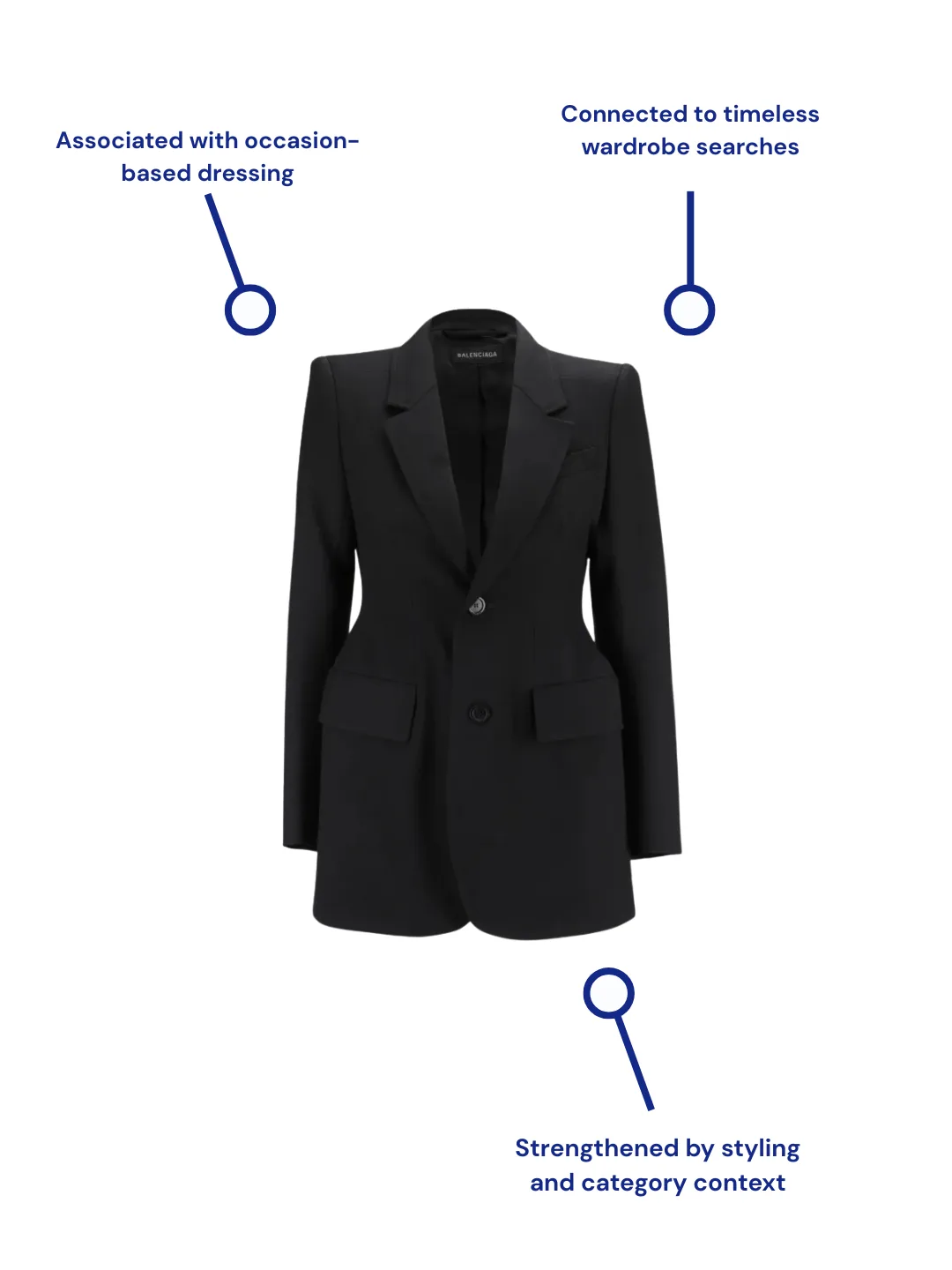
A shopper asks ChatGPT for “a blazer that won’t look boxy on someone petite.” Simple enough question. Except answering it well means knowing something almost no product page states outright: does this specific blazer run true to size, does it run long in the body, is the shoulder structured enough to hold its shape on a smaller frame. A star rating won’t tell a model that. Neither will a size chart that just lists XS through XL.
So the model does one of two things. It hedges, naming a brand while adding “you may want to size down,” which reads like a guess because it is one. Or it skips the brand and recommends whoever actually answered the question in their product data. Either way, the brand that never wrote the fit down loses the recommendation, even if the blazer itself is exactly what she wanted.
The follow-up question every AI answer runs into
Search used to stop at the category. Someone typed “petite blazer,” got a results page, and did the fit-guessing themselves by reading reviews or gambling on a return. An AI assistant doesn’t get to punt that decision to the shopper. It’s being asked to commit to an actual answer, which means it has to reason through fit before it ever gets to style.
That’s a real shift in what product data has to do. “True to size” used to be a nice-to-have line buried under the description. Now it’s often the deciding factor in whether a product gets recommended at all, because it’s usually the first thing standing between a vague category and a confident answer.
Why a size chart isn’t the same thing as fit information
A size chart tells a model your garment’s measurements. It doesn’t tell the model how those measurements behave on a body, which is a different question entirely. Two blazers can share identical chest and shoulder measurements and fit completely differently once you factor in structure, stretch, and cut. A model reasoning about “won’t look boxy on someone petite” needs to know about the second thing, not just the first.
This is why review mining has become such a common (and messy) workaround. Shoppers write “runs small, sized up and it was perfect” in a review, and that line ends up doing more work for AI visibility than the entire size chart, simply because it’s the only place fit behavior actually gets described in words. That’s not a reliable system. It depends on someone happening to write the right review, and on the model happening to surface it.
What we keep seeing when we check this
We’ve pulled catalogs where two nearly identical jackets get treated completely differently by AI assistants, and fit language is almost always the reason. One product page says, plainly, “fitted through the shoulder, true to size, size down if you prefer an oversized look.” The other says “wool blend, available XS-XL.” Same category, similar price, similar reviews. Only one of them gives a model anything to reason with when a shopper asks a fit-specific question.
The brands that show up consistently aren’t the ones with better tailoring. They’re the ones that wrote down what the tailoring actually does on a body, in language a model can actually use.
What to check on your own product pages
A few things worth pulling up right now, on a handful of your actual bestsellers:
- Does anything on the page say whether it runs true to size, small, or large, in plain language, not just a chart
- Is fit described relative to a body type or silhouette, not just a garment measurement
- If a piece is meant to be oversized or cropped on purpose, does the page say so, or does it just look that way in the photo
- Are review mentions of fit the only place this information lives, or is it also written into the product data itself
None of this requires new photography or a rewrite of your brand voice. It’s one more layer of specificity sitting next to the description you already have, and it happens to be the layer a model reaches for first when someone asks a fit question instead of a style question.
Check what your catalog says back
Ask an AI assistant a fit-specific question about your own category, the kind a real shopper would actually type before buying something they can’t try on. See whether your best pieces show up, and whether the model sounds confident or like it’s guessing. An AI visibility audit shows you exactly where that gap sits in your catalog, product by product.
Book a demo and we’ll check what your own product data says about fit, before your customer has to ask.