How AI Search Is Changing Shopify Traffic and What Fashion Brands Must Do Now
Dec 4, 2025
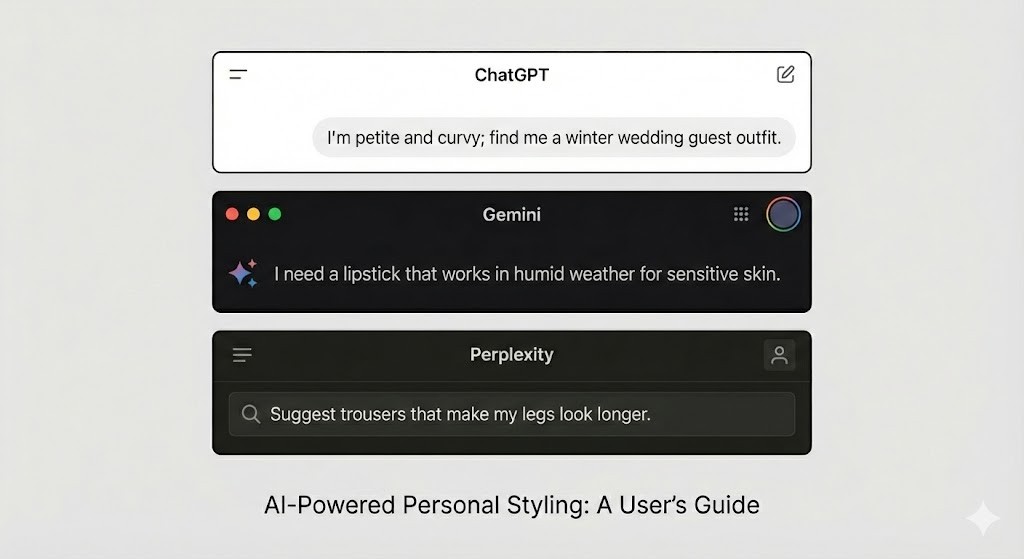
Shopify brands are starting to notice that their traffic patterns look different. Some pages spike without any clear referral source. Some products that never ranked on Google are suddenly showing up in customer chats. Shoppers are landing on sites after asking very specific personal questions like “I am 5 foot 2 with warm skin tone and I need a coat for New York in February.”
This is not traditional SEO. This is the new wave of AI search.
People are describing themselves instead of typing keywords. They ask for advice instead of typing product names. They combine intent, body details, climate, and mood in one natural sentence. It is how people talk in real life and this is what models are trained on.
How this changes traffic for Shopify brands
AI search does not start on Google. It starts inside conversations. A shopper says:
“I want trousers that make my legs look longer.”
“I need a lipstick that works in humid weather.”
“I am short and curvy and I want a winter wedding guest outfit.”
The model tries to find products that match the request. If your product feed does not carry the right context, your brand is invisible even if you sell the perfect item.
This is why some brands are seeing unexplainable traffic spikes. AI models are surfacing them in conversations because their product data has enough descriptive context to match the request. Most brands do not have this advantage yet.
Why fashion and beauty need a different approach
Fashion and beauty products are emotional and physical. Models need signals about fit, color, body type, fabric behavior, climate, undertone, silhouette, and styling intent. These are the exact attributes that are missing from most product feeds.
Generic SEO tools cannot fill this gap because they are not built to understand how a dress drapes, how a serum works in humidity, or how a color sits on warm medium skin.
LLMs respond to language patterns that reflect real human needs. If your product feed is not written in that language, the model will choose another brand.
What fashion brands must do now
1. Add body relevant context to product data
Describe how it fits different bodies. Short torso, broad shoulders, petite inseam, curvy hip fit. These details help the model map real people to real products.
2. Add accurate color and fabric language
Color families, undertones, knit weight, drape, structure, breathability, movement. These signals help models interpret style and comfort.
3. Translate product details into natural shopping language
Use the phrases real customers use when shopping for clothing and beauty. Not marketing copy. Not keyword stuffing.
4. Make your catalog readable by AI models
Your product feed should be structured so models can pick up attributes, relationships, and intent.
5. Think beyond search results
Your products now appear inside conversations. This is a new entry point for brand discovery.
The shift is already happening
More shoppers are turning to AI search for fashion and beauty because it lets them describe themselves fully. It feels easier. It feels personal. It feels like someone finally understands what they want rather than forcing them to browse category pages.
Brands that evolve their product data for this new search behavior will win visibility. Brands that wait will lose impressions they never knew existed.
The future of Shopify traffic will come from conversations. The brands that prepare for that shift now will stand out when AI becomes the main discovery channel.
How Veristyle solves this shift in AI search
Veristyle was built for this new kind of shopping behavior. Our system translates a product feed into the kind of context AI models actually understand. It adds fit logic, color relevance, fabric behavior, skin tone matching, and styling intent so your products appear in natural language searches inside ChatGPT, Perplexity, and Google AI Overviews.
It gives models the same signals a human stylist would use. That makes your catalog visible in conversations where customers describe who they are and what they need.
The result is simple. More impressions. Better product matches. Stronger conversion from traffic that comes directly from AI search.