She's not searching for products. She's searching for her trip.
The shopper asking AI what to pack for the Amalfi Coast isn't browsing. She has a flight booked and a budget to spend. Here's why most fashion brands aren't showing up in those answers.
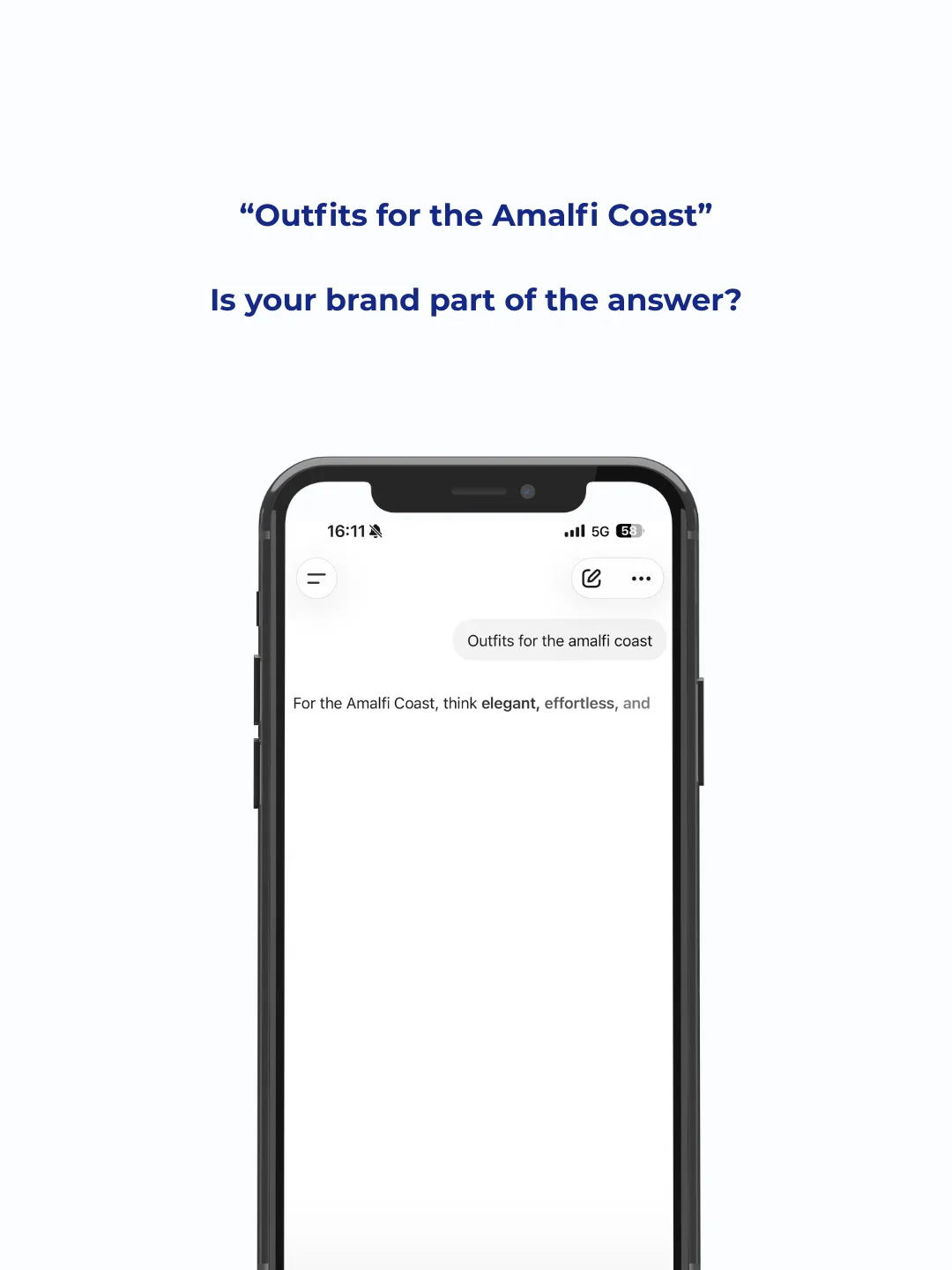
There is a very specific kind of shopper active in late June. She has a trip booked, a destination in mind, and about three weeks to sort out what she’s wearing. She opens ChatGPT and types “outfits for the Amalfi Coast” or “best summer dresses for Greece that aren’t touristy.”
She is not browsing. She is buying.
Why destination searches are different
A shopper asking AI about Amalfi Coast outfits is a different buyer from someone typing “summer dress” into a search bar. She has a real use case, a timeline, and a budget she has already mentally allocated to this trip. It is going to get spent somewhere.
The query itself contains real information. Mediterranean heat. A range of occasions: beaches, clifftop dinners, cobbled street walking. An aesthetic that reads local rather than tourist. Practical requirements like fabrics that survive salt air and pack without wrinkling. She is telling you everything you need to make the right recommendation. The problem is that most brands’ product data cannot hear her.
What AI needs to match a vacation shopper to a specific product
When ChatGPT or Perplexity gets a query like “what to wear in Santorini as a UK 14,” the model matches it against what it knows about products. Not titles. Attributes.
A useful match for that query needs a piece that works in 35C heat, doesn’t read beach-only when worn to dinner, photographs well in direct sun, and doesn’t pull at the hips on a size 14 frame. That is a checklist most product descriptions don’t come close to addressing.
“Midi dress. Relaxed fit. 100% linen.” does nothing for her.
“Wide-leg linen trouser with a generous waistband and real pockets, stays cool and uncreased in humid heat, drapes cleanly on a UK 14 without clinging through the hips” answers three of her questions before she has asked them.
The brands showing up in AI’s vacation recommendations have product data that reads like a well-travelled friend who knows both the product and the destination. Getting there does not mean rewriting your entire catalog. It means tagging products with the right context for AI search: climate suitability, occasion range, how a piece actually behaves in real conditions.
The buying window is open right now
Summer 2026 travel planning is happening this week. The shoppers asking these questions in late June are buying in late June. A brand that structures its catalog data to speak to Mediterranean holidays, packing-light constraints, or coastal occasions captures buyers who have already decided they are buying.
There is also a compounding effect that is easy to miss. AI models build familiarity with brands through repeated recommendation. Consistent visibility in destination queries over the next few weeks creates a kind of quiet authority that takes much longer to build if you start in August.
Independent brands with curated resort collections or destination-specific edits are genuinely well-positioned for this. The depth of product knowledge already exists: which pieces pack small, which fabrics survive humidity, what works at a waterfront restaurant. That knowledge just needs to be in the product data rather than sitting in a buyer’s notes or a lookbook caption.
What this looks like when it works
When a brand’s products are rich with occasion context and destination relevance, AI has something to work with. It can recommend a specific dress for a specific trip because the description told it enough to make the match. The shopper arrives at the product page already convinced it is right for her situation.
That is a different kind of conversion from a paid-click browser who is still deciding. She has context. She has intent. She chose your product because an AI matched it to her trip, which means the product and the occasion already align before she checks out.
Returns drop. Repeat purchases follow. The same infrastructure that gets you into AI vacation queries also powers on-site fit recommendations for every shopper, regardless of where they started their search.
Where to start
An AI visibility audit takes about five minutes and shows how your products perform against the searches your target shopper is running right now. For brands with summer collections live, this is the fastest way to see whether you’re showing up where the intent is highest.
The shopper planning her Amalfi trip has already decided she is buying. The question is whether your brand makes it into the answer she gets.