Your highest-value shoppers aren't on Google anymore
The shopper who spends twice as much and returns half as often is searching differently. Here's what fashion brands need to know about where she's looking.
There’s a shopper profile that fashion brands rarely talk about directly, but everyone recognises. She buys confidently, has high standards, doesn’t return much, and when she finds a brand she trusts, she comes back. Her average order value runs roughly twice what you’d see from a shopper who clicked a paid ad.
She isn’t discovering brands on Google anymore.
Where she starts her search
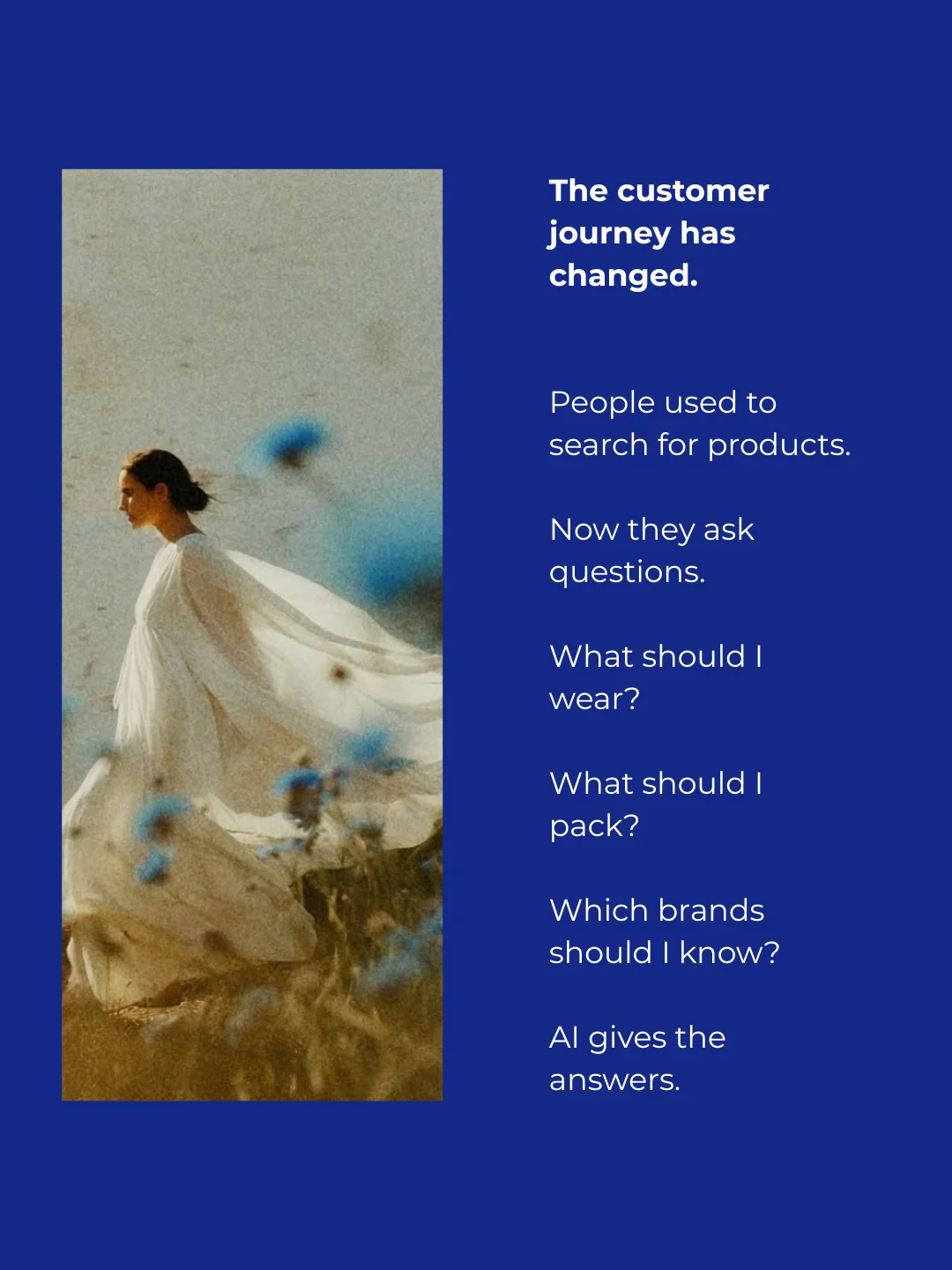
The high-intent fashion shopper in 2026 is far more likely to open ChatGPT, Perplexity, or Google’s AI Overviews and ask a question than to type keywords into a search bar. Not because she’s a tech early adopter. Because asking a question gets better answers than typing “linen dress summer wedding.”
Her query looks more like: “What should I wear to an outdoor wedding in August if I’m between a UK 14 and 16 and want something I can wear again to work dinners?” That’s not a keyword. That’s a whole situation, and the only tools that can actually answer it are the ones that read natural language and match it to real product attributes.
The brands showing up in those answers are the ones she considers. The brands that don’t show up don’t exist in her consideration set, no matter how good the product is.
The data already shows this
AOV for shoppers who arrive via AI referrals tends to run around twice the baseline for the same brand. That’s not a statistical quirk. It tracks with the shopper profile: someone who asked a specific question, got a specific recommendation, and arrived at your product page already convinced it was right for her.
Compare that to the paid-search shopper who clicked because the image looked nice, didn’t read the description carefully, ordered two sizes, and returned one. Both shoppers converted. The outcomes are very different.
The high-AOV shopper also returns less. She matched the product to herself before buying — the heart of fit-aware product discovery. When your product shows up for a fit-specific AI recommendation, the description that earned it has already done most of the conversion work for you.
Why most brands are invisible to her
Her questions can’t be answered by product titles. “Linen midi dress, relaxed fit, summer 2026” doesn’t tell an AI assistant whether it works for someone between a 14 and 16 who needs occasion coverage and wants to re-wear the piece to work. The model can’t make that match.
The product data that enables the match is what most brands haven’t built yet. Fit notes that go beyond size ranges. Occasion tags that distinguish “garden party” from “beach wedding.” Body shape compatibility, how fabric behaves in heat, how a piece photographs in natural light. That level of specificity is what makes a product recommendable in a natural language conversation.
One of the Nayiri Jewelry team put it well: “Customers search by feeling. For jewelry, where someone asks for pieces that feel meaningful or suit a certain occasion, the attributes that matter are metal type, symbolic meaning, and design style. If that information isn’t in the product data, AI can’t surface it.”
The brands already showing up for those queries didn’t overhaul their catalogs overnight. They enriched methodically and let the specificity do the matching.
The window that matters right now
There’s a compounding dynamic that’s easy to miss. AI models build familiarity with brands through exposure, not just indexing. Brands that have been appearing in recommendations for the past few months have an implicit authority that newer entrants will take time to build.
This isn’t a reason to give up. It’s a reason to move now rather than after the next sale season. The high-value shopper who asks AI for outfit recommendations today will develop brand familiarity based on what shows up in the next few months. Getting into that window, consistently, is what turns AI visibility into revenue rather than an experiment.
More than half of Gen Z already research products on ChatGPT before they buy. That share is growing across age groups. The shopper profile described here isn’t a niche. It’s the direction the market is heading.
Where to start
If you want to see how your catalog performs right now for the kinds of queries your best customers are actually running, an AI visibility audit takes about five minutes. Most brands are surprised by the gaps. Some are surprised to find they’re already showing up.
The shopper who buys more, returns less, and comes back is out there. She’s just asking AI to help her find you.